When you’ve built a reputation for excellence, your own history can sometimes work against you.
The more you achieve, the higher the invisible bar climbs. If you’re stuck on that project, it’s not because you’ve lost your edge. You’ve convinced yourself that every new piece must be as polished as your career-defining wins, or it isn’t worth publishing at all.
This is the expert’s trap: You care too much to publish something that feels less than. But perfection isn’t a strategy. If you’re holding back your best insights, the confidence you seek only comes when you hit “publish.”
Few in music have faced this at a higher level, for longer. Whether you’re a fan or not, consider Paul McCartney your case study in getting the important work done.
After all, he exists under a pressure most of us will never face: the crushing weight of his own past. High expectations from adoring fans on one side, reflexive critical dismissal on the other. If anyone could justify holding back – waiting until the thing was ready, sitting on ideas until they reached some impossible standard – it’s Paul McCartney.
And yet, at 83, he recently released his 34th solo album, The Boys of Dungeon Lane. That decision – to keep creating under the weight of the astounding body of work he created with The Beatles – is what continues to fascinate me.
The Weight of Your Own Work
Whether you’re just beginning to build your body of work or you’ve been at it long enough that your own past work is starting to set the bar, you know some version of this feeling.
Either way, you’re in good company.
After fifty years of watching McCartney build his body of work, I’ve mapped the mindsets and systems that kept him creating – through doubt, through comparison, through decades of critics measuring him against his own past. He makes the music and decides to finish it and put it out again, now at 83, knowing exactly what the critics will say.
What made that possible for McCartney, and what can make it possible for you?
I’ve laid out nine practical lessons from the life and music of Paul McCartney, clustered around two ideas: the act and process of creating, and how your body of work can compound into something meaningful and lasting.
1. Capture Every Idea

Chaos and Creation in the Backyard, 2005
One of my favorite McCartney solo albums is Chaos and Creation in the Backyard. The cover depicts a young Paul, snapped by his brother Mike, escaping to the backyard with his guitar in hand to create.
McCartney doesn’t wait for inspiration. He doesn’t sit down when the stars align and the muse shows up with a cappuccino. In fact, at gatherings, he was known to disappear into a nearby closet the moment the mere hint of a melody arrived — to get the song out of his head and onto paper before it vanished. He doesn’t wait for the studio or a “right” moment.
McCartney’s creative process follows a pattern biographers have tracked for decades. When an idea arrives, he picks up the guitar. His father installed a “Do It Now” habit in him as a boy, and it stuck – the moment a thread appears, he follows it.
I love the way he’s described songwriting as “pulling something out of a black hole and creating milk and honey.” He noodles and scats placeholder lyrics, and doesn’t judge the early stages.
Before It Slips Back Into the Black Hole . . .
Your own inner genius may have downloaded some great ideas. And most of us are absolutely, 100% sure we’ll remember that idea later. Of course, we don’t. Seven other thoughts quickly replace that great idea, pushing it out of the frontal lobe and back into the black hole.
If you want a better system for capturing and remembering ideas, ask yourself two questions of your current – or next – system:
1. Where will I consistently capture my ideas the moment they arrive?
2. How will I reliably find that idea later?
I use Evernote, tens of thousands of notes with lots of tags to hopefully help pull them up later. Works most of the time. Friends are trying to lure me over to Obsidian. Sophisticated systems are springing up every day. Find yours.
2. Carve Out Your Quiet Space
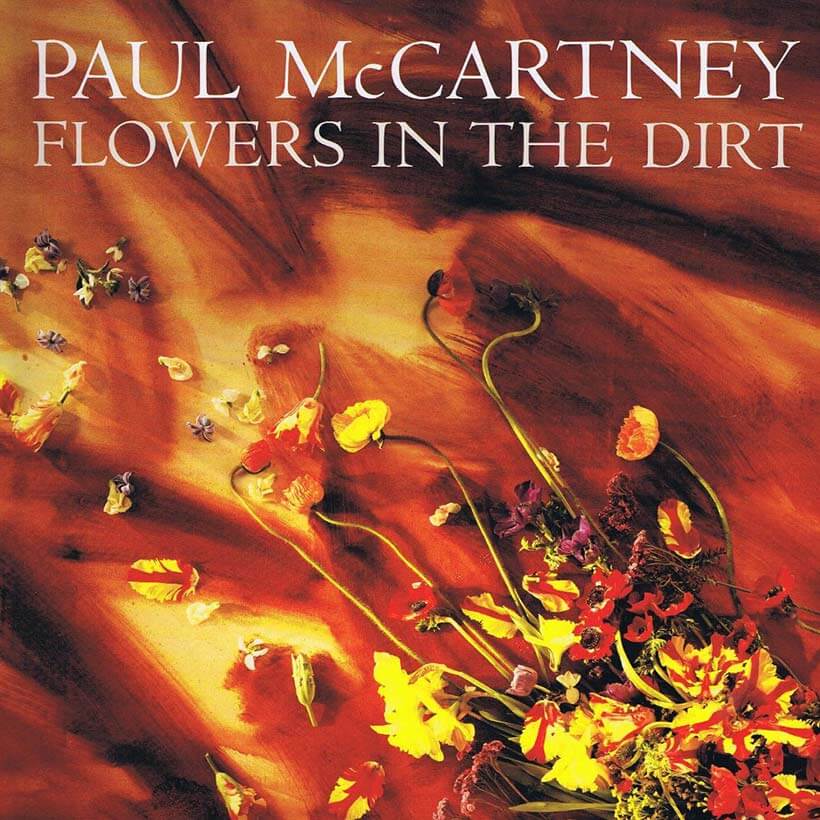
Flowers in the Dirt, 1989
McCartney knows he can’t rely only on moments in the backyard to create. Like all of us, he needs to create intentional space to focus and create. He protects reliable pockets of time and shows up for them consistently.
McCartney actually wrote one of his best songs about this. Track four on his 1989 album Flowers in the Dirt, Distractions is a classic Beatlesque ballad he framed as “life’s busyness interfering with what matters most.” The irony is that he had to carve out quiet space to write a song about not having quiet space.
For the rest of us – not recording artists operating out of a home studio with a full catalog to fund our habits – the translation isn’t complicated.
McCartney shows up, and eventually the work shows up. That order matters.
3. Find Tomorrow’s Spark
McCartney describes the experience of writing in a way that sounds a lot like what Mihaly Csikszentmihalyi calls flow — the world around him fades, self-consciousness drops, and it’s just him and the guitar pulling the next melody out.
That became my target: Few things feel better than working on something and not wanting to stop. So, for years, I’ve attempted to create the perfect home-office haven to make it easier for the work to happen. Eventually, it dawned on me that as important as the space was, the creative spark I brought to it got me into a session worth having.
One of the most important components of achieving a flow state is that the activity itself feels intrinsically rewarding. And I’ve found that if I don’t arrive with something I’ve already started – that I’m excited to return to – it’s too easy to get lost in indecisiveness and wander through Evernote.
McCartney is the rare exception: the work is him.
For the rest of us, we have to build an on-ramp intentionally. The simplest thing that’s transformed my own creative sessions is this: the night before, I’ll choose exactly what I’ll start with the next day—and I make sure it’s something I’m genuinely excited about.
The key is keeping it small and specific—just one passage, one page, one section. Not the whole project, just the piece that feels like a treat to return to, a puzzle I get to solve. For me, that’s one of the several articles I’m working on, the one that feels closest to finished. If I arrive with that, I arrive with momentum – and momentum is usually enough to carry the session.
4. Release It Before It’s Ready
Not every Paul McCartney album is Band on the Run or Tug of War. He knows this. He releases his new work anyway. Because at some level, he understands that holding back the work blocks the inspiration pipeline.
This runs directly against the instinct I see in almost everyone I work with – writers, coaches, doctors, Indie-Experts with something worth saying. The instinct is to wait and polish it more. The next draft will be better. The next one after that will finally be ready.
Here’s what usually happens instead: the months stack up, and the standards rise. Nothing meets those standards, and the work gathers dust on the hard drive.
McCartney’s pragmatic view is this: finishing and releasing is the work. Not releasing blocks the pipeline, and the next idea can’t arrive until you let go of the current one.
His restraint on Here Today – the stirring tribute he wrote about his relationship with John Lennon after his death – is a masterclass in this. With the world waiting for The Big Statement from Paul about his former bandmate, if there was ever a reason to become frozen with indecision and doubt, this was it – and McCartney could have delayed or overproduced the song into something grand and orchestral.
Instead, what emerged is simple and understated – framed as a conversation between two old friends. And it connects in a way that no amount of additional polish would have improved.
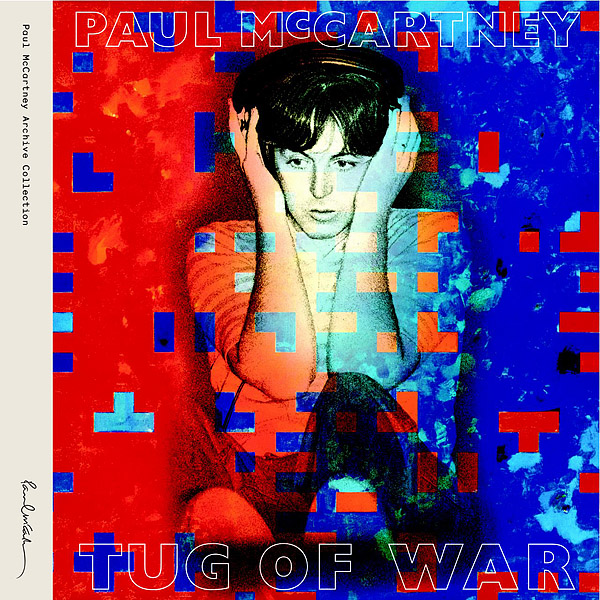
Tug of War, 1982, featuring Here Today
Despite the impossible expectations of him, McCartney stepped up and released his most honest, vulnerable version anyway — choosing connection over perfection expected of the moment. That willingness to release something unfinished and exposed made Here Today one of his most enduring songs.
This is what releasing before it’s ready really looks like: it’s not reckless or sloppy, but courageous and human.
That decision is the entire principle in action: The moment you let the work leave your hands, you stop being the gatekeeper and become the channel. The standards stop rising endlessly and your hard drive stops filling with unfinished projects. And, most importantly, the next idea is finally free to arrive.
5. Trust Your Audience
McCartney has long expressed a warm, trusting relationship with his audience. This trust appears in his live shows, which feel more like shared events than performances. He once said, “Treat the audience like they’re your mates. I feel like I’m playing to family.”
At its core, McCartney’s approach is rooted in reciprocity: He offers sincere, varied work and a genuine live concert connection, and audiences reward it with lifelong (and cross-generational) devotion.
He writes from instinct and love, then releases without excessive second-guessing—trusting that if the work is genuine, the right people will connect with it.
For a global rock star, this warmth seems surprising to outsiders. To his fans, it shows up everywhere in his body of work. The three self-titled McCartney records are prime examples: each one home-recorded, raw, filled with musical experiments that don’t always work. Because I enjoy watching a genius create in his lab, McCartney I and II are two of my favorite McCartney albums.
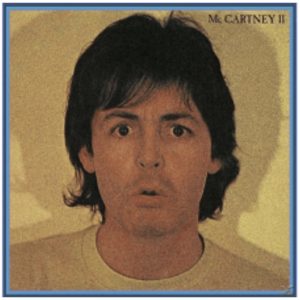
McCartney II, 1980
When you’re just starting out, feedback is often scarce. You create largely in the dark, sustained by trust that the right audience will eventually find you.
Even McCartney, at the peak of his fame after the Beatles, felt that same uncertainty. The recent documentary Man on the Run captures a revealing moment: launching his band Wings, one of the world’s most beloved musicians worried that no one would show up to his concerts. Those early doubts gave way to confidence as sold-out crowds showed up ready to meet him where he was.
When you’re consistently producing your work in public, there comes a time in your creative or professional journey when the audience reveals itself. They tell you—through their attention, loyalty, and honest feedback—why they trust you, or why they don’t. McCartney’s decades-long example invites us to release with that same spirit: create from joy, share it openly, and let the relationship with your people grow organically across years.
6. Audiences Have Seasons
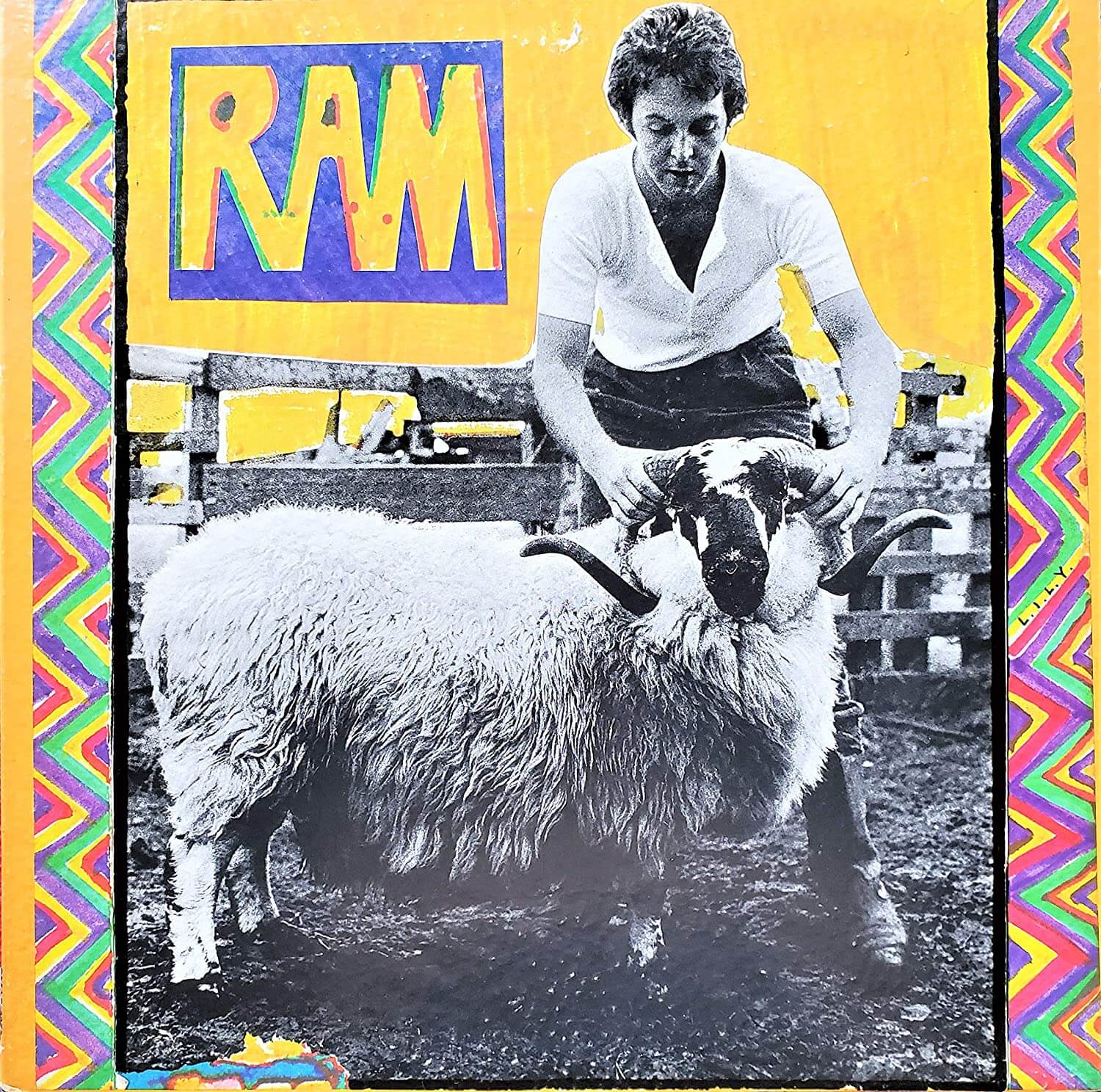
Ram, 1971
Harlan Coben said it well: “We are all always 17 years old inside.” That’s why the music you put on for road trips is usually the songs that locked into core memory in high school and college.
I still have my battered copy of Ram, one of the first albums I ever purchased – $3.79 at Grose Hardware. Ten years later, Tug of War became the soundtrack to a pivotal college year.
After school, listening usually settles into a pattern. For some people, music stays in the background—an older sibling’s albums, a roommate’s playlist, the radio, and later, the algorithm. They remember songs because the songs were around. Active listeners like me keep returning to favorite artists across decades while still discovering new ones.
My own listening has run in seasons. Some years it’s Pat Metheny and Max Richter while I write, with weekends spent with Chicago or Earth, Wind & Fire. I’ve missed entire McCartney albums while life was happening. But his best songs always find their way back. Every album, however uneven, contains at least one gem that earns its place on my permanent McCartney playlist.
Your audience works the same way.
Too many people treat their audience like a database to spam. That changes the moment you remember it’s made up of individuals at different places in their lives, much like you are right now, reading this.
Some people need your work for a season, then move on. Some become fans and stick around. People ebb and flow, especially online, where attention spans are short, and loyalties shift fast. Someone might binge your content for six months, then vanish for two years while life takes over. Others discover you late. Some leave for good.
That’s the natural rhythm of human attention.
With audiences this fluid, how do you build an online audience that supports a practice or business? Fortunately, the fundamentals that have worked for me across thirty years haven’t changed.
When you’re playing a long game, you stop burning energy trying to keep everyone constantly engaged, which is a never-ending treadmill that quickly burns you out.
Trade the Treadmill for Something That Lasts
- Build channels deeper than the ephemeral trending platform: an email list, a community or private group, where relationships can survive the natural changes in platform technology;
- Nurture and deepen relationships through regular email, rather than looking at email as solely a sales channel;
- Consistently create work that you publish – a body of work – that’s already there when people are ready;
- Trust that the right people will circle back when the timing is right and focus on being easy to remember and easy to find.
One of my best clients resurfaced after eight years and signed on for another year of coaching. My strongest relationships have almost always been built through email and course communities — not the algorithm’s fleeting spotlight. Email rewards patience and substance. It’s where people show up when they’re actually ready to buy, collaborate, or connect.
So if your numbers dip, don’t read it as failure. Keep releasing great work. The people meant to be in your audience will find their way back — and new ones will arrive right on time.
7. Keep It Universal
This is a topic I’m passionate about; I’ve written about it before because it applies directly to the work you do. McCartney is a notoriously private man. Yet he’s written some of the most emotionally open songs in the popular canon. Those two things can coexist because he rarely told his own story directly.
He translated it.
Take Blackbird. McCartney wrote it in the days after Martin Luther King’s assassination. As writer Ian Leslie notes of the song: “…it’s very McCartney to respond to a violent catastrophe with something gentle and hopeful.”
The blackbird isn’t a private symbol — it’s a simple, resonant image anyone who has felt silenced or oppressed can inhabit. “Take these broken wings and learn to fly.” The song works because Paul translated personal experience into metaphorical language that resonates.
He’s talked about this in an interview:
“I’m proud that the Beatles’ output is always pretty positive. There’s nothing in there that says ‘go and screw your parents.’ Let It Be, Hey Jude, Blackbird — all hopefully a good message. Sometimes when I’m writing songs, I will think, ‘There are people out there who are going through some problems, and hopefully someone out there listening to this will think, ‘Oh yeah, it’s not just me going through this, and this is something I can fix.”
That’s not sentiment. That’s a writer who knows exactly what his work is for.
The critics sneered at that hopeful, optimistic worldview. And yet it’s precisely why the songs endure. At the height of the sixties’ “cool” pose of iconoclasm and edge, McCartney refused to play along. After the Beatles’ breakup, the narrative settled into Lennon as radical visionary, McCartney as shallow family man.
Family, home, connection, warmth – none of it was considered cool. But those universal themes freed him to write about the things most people actually live: love, loss, wonder, the small ordinary joys, with an optimism that never needed an apology. Five decades on, people still sing Let It Be.
When Personal Becomes Universal
That kind of staying power isn’t an accident. It’s what happens when you write for the person on the other side of the page, not just for yourself.
Purely personal writing keeps you at the center: your specific experience, private symbols, and emotional processing. Readers get the surface story, but without a door into their own lives, it can feel like reading someone else’s diary.
Universal writing opens that door. It says, in effect: here’s my window into the human experience. Look through it and see your own reflection.
That’s the opportunity any of us has as communicators. Start from the personal, then ask: how does this specific experience point to something larger that other people carry too?
8. Ignore the Critics
Few artists have endured the sustained critical hostility McCartney faced in the years after the Beatles’ breakup. I reached record-buying age after the breakup, and I recall the frustration of watching as the self-anointed rock critic class rewrote the Beatles’ story in real time, casting Paul as the lightweight and sentimental one, the one who wrote silly love songs, while John wrote Serious Art.
With John’s death, that story instantly hardened into amber before anyone could correct it.
The rock press treated nearly every solo album as an afterthought. Not his best work. Competent, but… That verdict followed him for decades.
So what did McCartney do when the critics called him unserious? He wrote Silly Love Songs. On purpose. It became one of his best-selling singles. He didn’t argue with the critics. He didn’t try to prove them wrong by becoming someone else. He doubled down on himself — and made something that connected with millions of people who had no interest in the critical consensus.
When you’re doing anything visible — publishing, creating, putting work into the world — you will have critics. These days, especially on social media, you’ll also encounter trolls (and increasingly, bots) with no stake in your work and no interest in engaging honestly.
McCartney’s response is the only one that works: keep creating. Not to prove anyone wrong, but because the work is the point.
9. Build on Mastery
A lot of writing advice claims the best way to build an audience is to learn in public, share your experiments in real time, and document the messy process. Fellow travelers will find you, and an audience on the same path may grow over time.
When you’re just starting, that advice sounds sensible. It’s exactly how McCartney put in his 10,000 hours. He talks about those dingy club years – learning their craft while collecting new chords, trying them out in the next song, and figuring out how it all worked together on stage in front of whoever showed up.
Paul and the boys were learning in public.
Most of the Indie-Experts I work with have already put in the hours and built a substantial body of work. Yet one of the surprising things I’ve encountered in coaching brilliant experts is this: some of the smartest and wisest among them are often the ones who question and doubt themselves—and their work—the most intensely.
For these people, the real obstacle isn’t the years invested or the visible output. It’s believing those voices of doubt that slowly creep in during all those unseen years behind the scenes, working in isolation, without an audience to reflect their value.
You’ll Meet Your Mastery Through Your Audience
One of my favorite McCartney interviews is one he did for Lily Cole’s Impossible website in front of a small group of music students.
McCartney seems both pleased and surprised as he fields questions from musicians just discovering his music, and they comment on their awe at its sophistication: his effortless command of keys, harmonies, chord progressions, and melodic invention.
Yet because it all sounds so natural – so easy – it’s tempting to miss just how rare and hard-won that level of mastery really is.
As Ian Leslie puts it: “Gifted melodists always risk being dismissed as superficial, yet melody penetrates us to our core. It is a language of emotion and the best tunes make you feel impossibly happy and impossibly sad at the same time.”
A recent Guardian review captured this dichotomy in his newer work, writing that several of the songs on The Boys of Dungeon Lane are:

Paul McCartney’s 2026 The Boys of Dungeon Lane
“… the kind of lyrically slender love songs that would have earned him a critical beating in the 1970s, but which these days seem impossibly charming, not least because they demonstrate his extraordinary melodic skill: listening to ‘We Two,’ you find yourself boggling a little at the sheer volume of deftly executed twists and turns he manages to cram into something so ostensibly slight.”
This is the steady hand of a master at work: make it look effortless.
For me, this is one of the most endearing qualities about McCartney, the artist: the world can clearly see and hear his brilliance, and yet he muses to that group of music students, “I don’t know how to do this. You would think I do, but it’s not one of these things you ever know how to do.”
In another interview, he continues, “The whole thing about it… it’s magic… I don’t quite know where I’m going, because I make it all up… There’s some kind of mystery as to whether you’re going to pull it off.”
McCartney often speaks about the mystery and unpredictability of songwriting—he doesn’t claim a formula or reliable way to predict commercial success. He writes from instinct and lets the songs go, hoping for the best.
“I’m hopeless at picking singles and stuff,” he tells us. “You know, I can write a few songs. I can never tell which one people are going to like.”
This humility and “not-knowing” mindset is a recurring theme in McCartney’s comments on creativity—he treats each song as an adventure rather than a calculated hit-making process.
McCartney’s deep proficiency wraps itself inside deceptively simple, unforgettable melodies. The listener never needs to see the complex chord structures and harmonic invention working under the hood. They find themselves humming that Silly Love Song on the way to work.
Your Body of Work Operates The Same Way
Your expertise—your complex chords and rhythms—often stays invisible to your audience. The hardest part of the work isn’t the craft; it’s framing it so it isn’t overwhelming. What they remember, what actually moves them and sticks with them, is the clean, emotionally resonant “melody” you wrap around it.
I help experts like you pull that melody forward, finding the version of your knowledge that feels effortless to your audience while still carrying all the sophistication you’ve earned. This is the version of your work they can hum in their heads long after the session ends, the one that makes them think, “This person gets it.”
Mastery isn’t about showing people how hard you worked or how much you know. It’s about making the hard work disappear so completely that what remains feels like a pure gift.
That’s how you build a body of work that lasts. And that’s how you turn decades of mastery into something your audience can’t stop thinking about – and can’t stop sharing.
As for this article, I see plenty that needs polishing. A few more days should do it.
But it’s time to let it go.
Now it’s your turn: what will you release today?
For Further Reading…
If you’re curious for more McCartney, here are three great resources.
- Ian Leslie has written one of the best books I’ve ever read about Lennon and McCartney: John and Paul: A Love Story in Songs. Published in 2026, this book corrects the historical record.
- On his Substack, Ian has written a brilliant article with 64 reasons why we love Paul McCartney. (Reason #57 features a link to his excellent McCartney Spotify playlist, which is a great listen.)
- This writer states that McCartney is the greatest songwriter of the 20th century. When you look at the criteria he used to reach that conclusion, I heartily agree.


Leave a Reply